
Vinyl Throwback: First Homework Assignment of 2017 (Stevie Wonder — Talking Book)
--[Re-posted from Eric Nielsen's Medium blog from 2017 - Stuck in Stereo - and written by Nick Russo]--
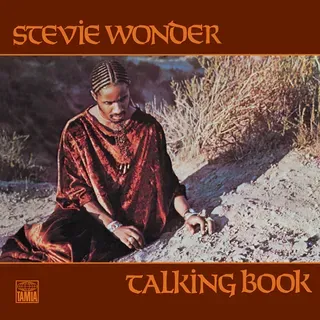
I could sum up my 2016 in an assortment of different descriptive sentences beginning with “The year I…” However, the one that I’m going to go with here is: “The year I discovered Stevie Wonder.” I have been enjoying retro music spanning from the 60s through the 80s for years now, but fantastic tunes from the R&B and soul genres have been an unfortunate blindspot. After a year of living with my good friend Zack and listening to the Stevie Wonder records that Zack would spin, Wonder has skyrocketed into the top-tier of my favorite old-school artists. I grew enamored with the melodic songs of love, the powerful tracks of faith and belief, and the many tunes that address social issues that are all too present still today. Best of all though, is how Stevie Wonder meshed each of those different themes into various genres with pop elements: R&B, soul, rock & roll, and more. So with that, I’ve decided to give music devourers and blog readers an enjoyable homework assignment for 2017: Stevie Wonder’s 1972 masterpiece, Talking Book.
Talking Book is Stevie Wonder’s fifteenth album, and its place in the chronology of his discography is noteworthy: Wonder was about to rip off a streak of critically acclaimed great albums (and major commercial successes too: “eighteen number one hits in the U.S. alone”) that I think is unprecedented in this day and age. He wasn’t just winning R&B/Soul Album of the Year awards, he was taking home Album of the Year awards for all of music. So, after having that great of critical and popular success, especially with the general masses and not just Rhythm and Blues enthusiasts, it could be argued that Stevie Wonder was holding the King of Pop title for Michael Jackson until MJ came around.
With regards to the album Talking Book, the elements that strike me most are the powerful lyrics, ridiculously catchy sonic melodies, and the groovy instrumentation. All of the above are present in the memorable opening track, “You Are The Sunshine of My Life,” which just in name give you an idea of the type of album Stevie Wonder has recorded. It is a touching, upbeat ode to his future wife, Syreeta Wright, with metaphor after metaphor used to describe Wonder’s devotion to their love. These impactful, “baring-it-all” lyrics are what make me love music so much. They show that there is tremendous hope in the world thanks to love and affection. In the background of the touching vocals are a funky but subtle bassline and a jazzy drum beat, accompanied by Stevie Wonder filling in occasional backing vocals to the tune of the instruments. “And if I thought our love was ending // I’d find myself drowning in my own tears” is just one line in the song that finds itself tugging at my heartstrings. There are many up-tempo and poppy tracks like this one on the album, but another one that has to be called out is the song that still gets a ton of play on radio and other media to this day: ”Superstition.” It was the lead single for the album, and it slots in at number 74 on Rolling Stone’s “500 Greatest Songs of All-Time” list. That may seem like an innocuous or unimportant fact, but it goes to show how significant of an impact Stevie Wonder had, and still has, on modern mainstream music listeners and media. “Superstition” begins with a steady kick and bass drum combined with precise snares that, when listened to through headphones, transport me to a sonic dimension akin to being at the greatest party of all-time. After just nine seconds of that, the memorable electric guitar riff kicks in. Interestingly, this track was originally written for legendary guitarist Jeff Beck, and the two of them recorded the first version of the song together. The now famous opening drumbeat even came from Beck himself. However, issues with Jeff Beck’s band delayed his version of the tune, so by the time he released it, Stevie Wonder’s version had been out for a while and was gaining all sorts of accolades. Having hearing his subsequent albums now, I think that Talking Book was a major turning point in Wonder’s career, because it allowed him to branch out in a good way, professionally and creatively. This certainly holds true for Wonder’s emergence into the mainstream music world at that time, and his continued presence in it decades later. Not only is this album a phenomenal one, but it is a special record to me because it was my launching point to getting into the masterful work of Stevie Wonder.
“Here is my music. It is all I have to tell you how I feel. Know that your love keeps my love strong,” is written inside the liner notes on the early version of this LP. To me, that’s an incredibly powerful “Acknowledgements” section to have on the inside cover of the album. It’s a great scene-setter for an outstanding album filled with Stevie Wonder’s outpouring of love to his partner, and humanity as a whole.
Must-hear tracks: “You Are the Sunshine of My Life,” “Superstition,” “Big Brother,” and “I Believe (When I Fall In Love It Will Be Forever)”